Roof Leak Repair in Bloomington, MN
A leak that shows up in a Minnesota January is rarely a shingle problem. The classic winter pattern — dripping on a sunny afternoon, quiet at night, a stain growing on a top-floor ceiling near an exterior wall — points to an ice dam: meltwater pooled behind the eave ice, backing up under the shingles and running down inside the wall. Homeowners replace sections of roof chasing these leaks, when the roof was never the entry problem. The dam was.
Tracing beats guessing. Your provider starts in the attic, matching the interior stain to the roof above it and reading the water's path — water rarely drips straight down from where it entered, especially on split-levels and cathedral ceilings where it can travel along rafters and framing before showing itself. The entry point gets identified before any repair is discussed, because a repair aimed at the wrong spot is just a delay.
Sometimes the trace does end at a genuine roof fault — a lifted shingle, tired flashing around a chimney or vent, a valley that's been leaking in every season. Winter makes those worse, since freeze-thaw cycles work water into every gap. Your provider handles those repairs too, and will tell you plainly which kind of leak yours is: dam-driven, roof-driven, or both at once.
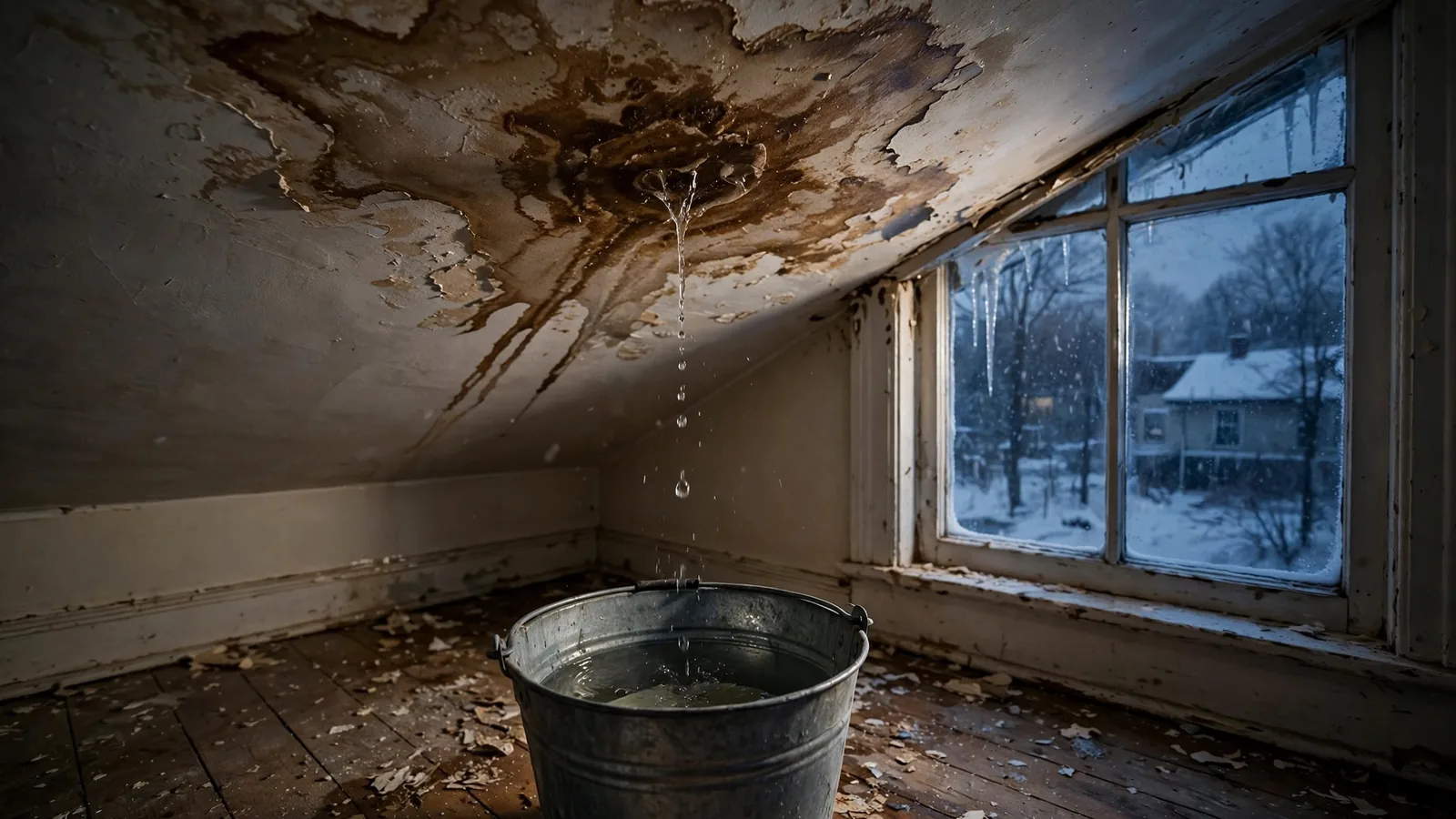
Signs of an ice-dam or winter roof leak
- Drips that start on sunny winter afternoons and stop in the evening
- A ceiling or wall stain growing during a thaw, stable during deep cold
- Leaks located near exterior walls rather than mid-roof
- Bubbling paint or soft drywall high on a top-floor wall
- A musty smell in the attic or top-floor closets after a thaw
- Stains that reappear in the same spot every winter
How your provider handles a winter roof leak
1. Trace the leak to its entry point
Your provider inspects from the attic side, matching stains and drip points to the roof above and following the water's path along framing. Guesswork repairs are how winter leaks survive three visits — the trace comes first.
2. Identify the source: dam, roof, or both
The findings separate cleanly: meltwater backing up behind an ice dam, a direct roof fault like failed flashing or lifted shingles, or a dam exploiting a weak spot. Each has a different repair, and your provider shows you the evidence for the call.
3. Remove the dam and repair the entry point
Dam-driven leaks start with steam removal so the pooled water is gone. Roof faults get their repair — flashing resealed or replaced, damaged shingles swapped, the weak detail rebuilt. The interior stain waits until the entry is closed and the cavity has had a chance to dry.
4. Dry-out guidance and prevention plan
Wet insulation and drywall don't dry on their own in a sealed winter wall. Your provider tells you what needs to dry, how to help it along, and what to watch for — then connects the leak to its root cause with a prevention conversation, so the same stain doesn't reopen next January.
Winter leaks in Bloomington homes
Bloomington's split-levels write the hardest winter-leak scripts in the metro: the upper roof drains onto the lower roof, meltwater doubles up at the junction, and ice forms exactly where two roof planes and a wall meet — then the leak appears in a room that isn't even under the dam. Cathedral ceilings hide the water's path entirely, showing the stain rooms away from the entry. The older ramblers add their own pattern: shallow eaves, long ice ridges, and leaks that track along the top plate into exterior walls. Local pros expect the water to have traveled and trace accordingly, instead of cutting into the ceiling below the stain and hoping.
Need roof leak repair in Bloomington?
One call connects you with a local technician. No forms.
(555) 234-5678📞 Call Now