Roof Snow Removal in Bloomington, MN
A Minnesota roof is built for snow — but it has limits, and Bloomington winters test them. A foot of light powder is one thing; the same depth after a wet, heavy snowfall, or drifted three feet deep against an upper wall, is a real load sitting on the structure. Snow is also the raw material of every ice dam: the deeper the pack, the more meltwater it feeds to the eaves on every sunny day. Clearing roof snow addresses both problems at once.
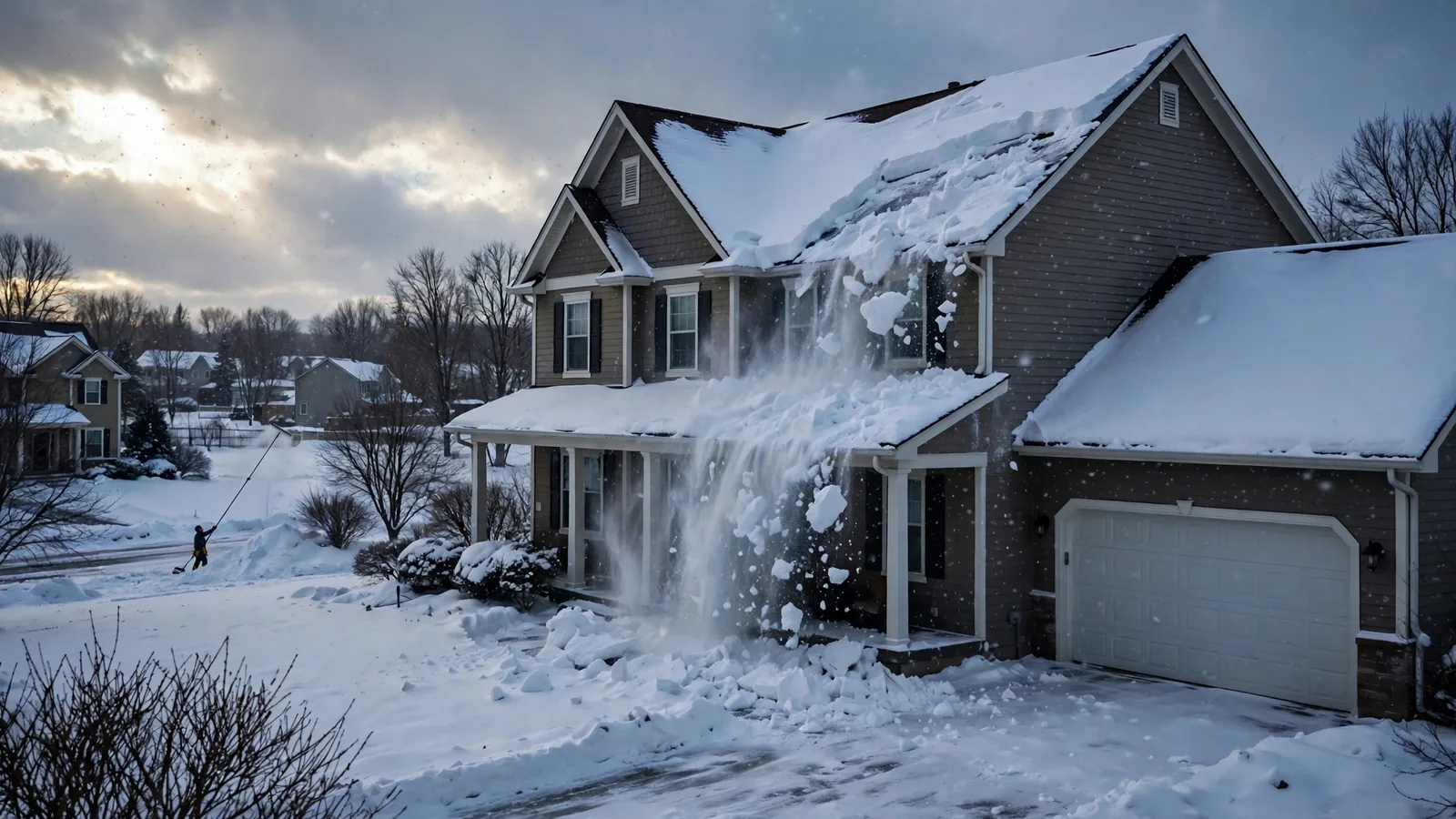
The work is about control, not just weight. Your provider clears the roof in sections, working from the ridge down and leaving a thin layer over the shingles so tools never scrape the roof surface. Valleys, vents, and chimney flashings get cleared by hand. It is emphatically not a job for a homeowner on a ladder with a shovel — an icy roof edge gives no second chances, and most roof snow injuries happen to people who own the house below.
From the ground, a roof rake handles the lower few feet of a single-story roof, and for many homes that's a sensible middle step after each storm. When the pack is deep across the whole roof, when drifts pile against a second story, or when a dam is already forming below the snow, it's provider work. Your provider will tell you honestly which situation you're in.
Signs your roof snow needs clearing
- Snowpack deeper than about a foot across most of the roof — deeper after wet, heavy storms
- Drifts piled against upper walls, dormers, or the uphill side of a chimney
- An ice dam already forming along the eaves below the snow
- Low-slope or flat roof sections holding snow long after steeper sections shed
- Interior doors starting to stick, or new creaks and cracks appearing — signs the structure is feeling the load
- Sagging visible along the ridge line or across a long span
How your provider clears roof snow
1. Load and access assessment
Your provider reads the roof first: depth and density of the pack, drift locations, slope and access points, and where cleared snow can safely come down without burying walkways, meters, or shrubs against the house.
2. Section-by-section clearing
Snow comes off in sections from the ridge downward, using tools that ride over the shingles. A thin layer is left in place to protect the roof surface — the goal is removing the load and the melt supply, not polishing the roof bare.
3. Detail work at valleys and penetrations
Valleys, plumbing vents, exhaust caps, and chimney flashings collect packed snow and ice that section clearing misses. Your provider clears these by hand — they're the spots where meltwater finds its way in.
4. Eave check before wrapping up
With the snow off, the eaves tell their story: any ice dam underneath gets identified, and your provider tells you whether it needs steam removal now or watching. You get the full picture while they're on site, not a surprise in February.
Roof snow in Bloomington
Bloomington sits in one of the snowiest metro corridors in the country, and its housing stock shapes the snow problem. Ramblers and split-levels from the 1950s–70s have long, modest-pitch roofs that hold snow instead of shedding it, and the split-level junction — where the taller section's wall meets the lower roof — is a drift magnet every time the wind blows from the northwest. Add-on sunrooms and garage roofs with even lower slopes collect the deepest loads on the lot. Local pros prioritize exactly those junctions and low sections, because that's where Bloomington's snow weight and ice dams concentrate.
Need roof snow removal in Bloomington?
One call connects you with a local technician. No forms.
(555) 234-5678📞 Call Now